Explore
AI that recognises images
Try creating
A demonstration that identifies different objects or species and tests how reliably it can distinguish them.

2027 · James Cook University · Cairns, Australia
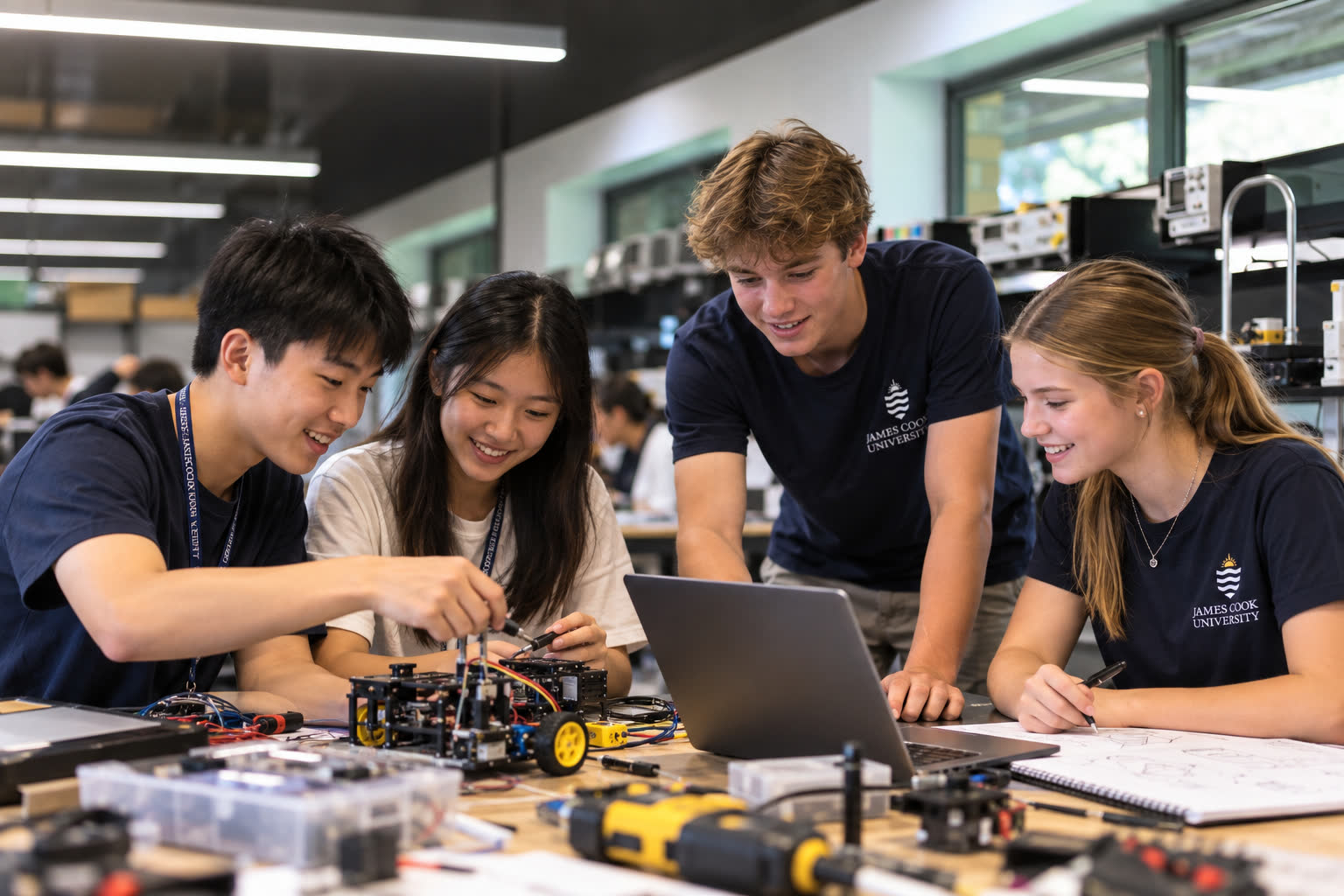
Join students from Australia and around the world for a five-day innovation challenge at James Cook University’s Ideas Lab.
Investigate a real-world problem, use AI to develop your thinking and create a solution with your team. Work with mentors, meet researchers and industry guests, explore the Great Barrier Reef and present your ideas at the final showcase.
Participation is arranged through schools and education agents.
2027 program partners
Cohort Group · James Cook University · AIIA
The Cohort Innovation Challenge brings secondary students together with university, research and industry partners to explore how technology can help address real-world problems.
Each year, the program connects students with a host university, challenge themes and people who can help them develop their ideas. Students investigate, experiment, work in teams and present a solution, gaining experience of how innovation happens.
AI is central to the challenge. Students learn how to use it to explore questions, develop ideas and support their project work. They also discover how AI can connect with images, data, sensors and robotics.
The program welcomes different perspectives and levels of experience. Whether a student is trying these tools for the first time or already building their own projects, there is room to contribute.
Your challenge begins in Cairns
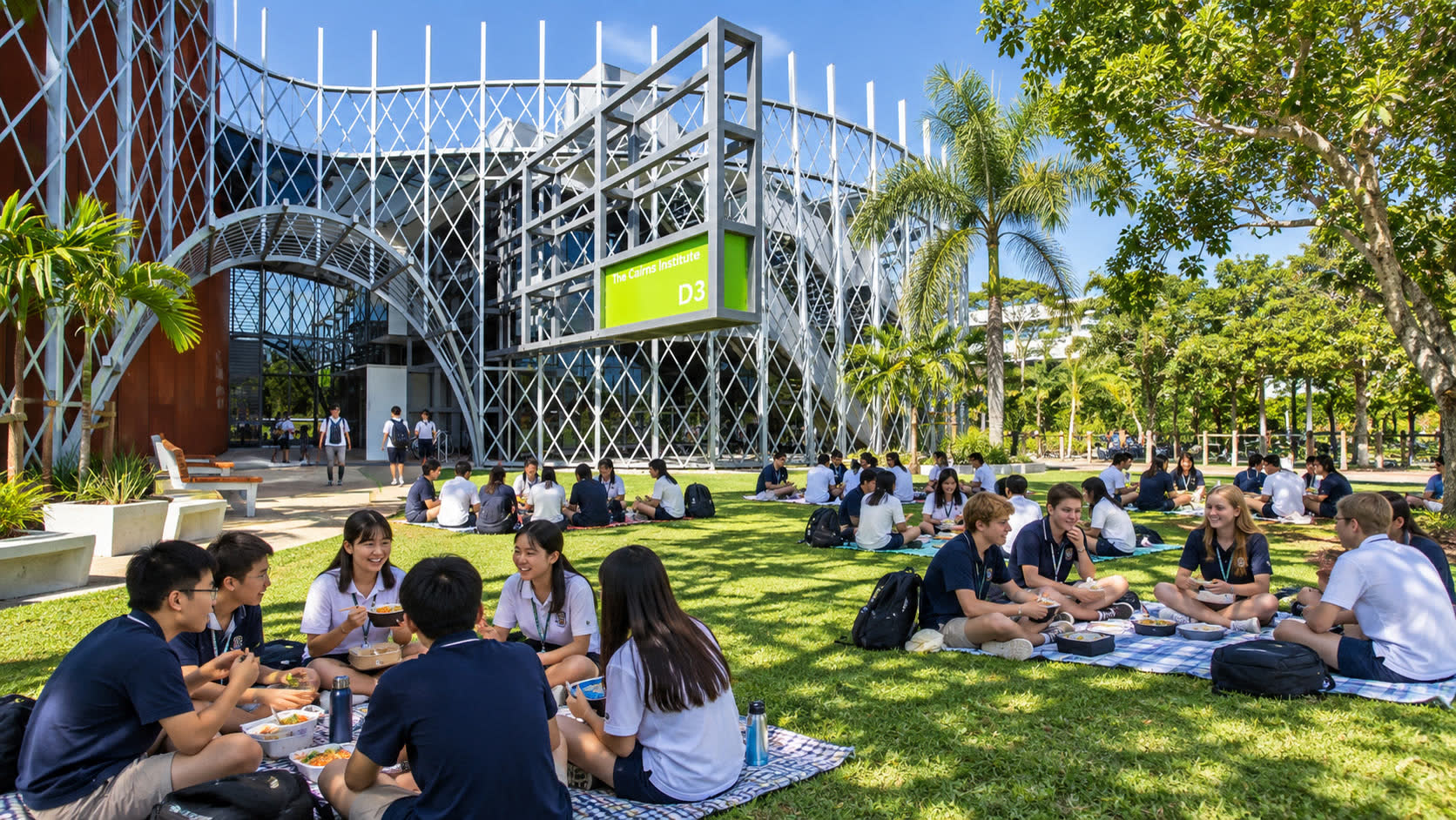
The inaugural Cohort Innovation Challenge will take place at James Cook University’s Cairns campus, with project activities based at the $30 million Ideas Lab.
Students will work within a university innovation environment, meet people involved in research and technology, and explore how ideas move from questions to practical demonstrations.
Cairns brings another dimension to that work. Access to the Great Barrier Reef, Australian wildlife and the tropical surroundings gives students an opportunity to experience the places and systems behind some of the questions they investigate.
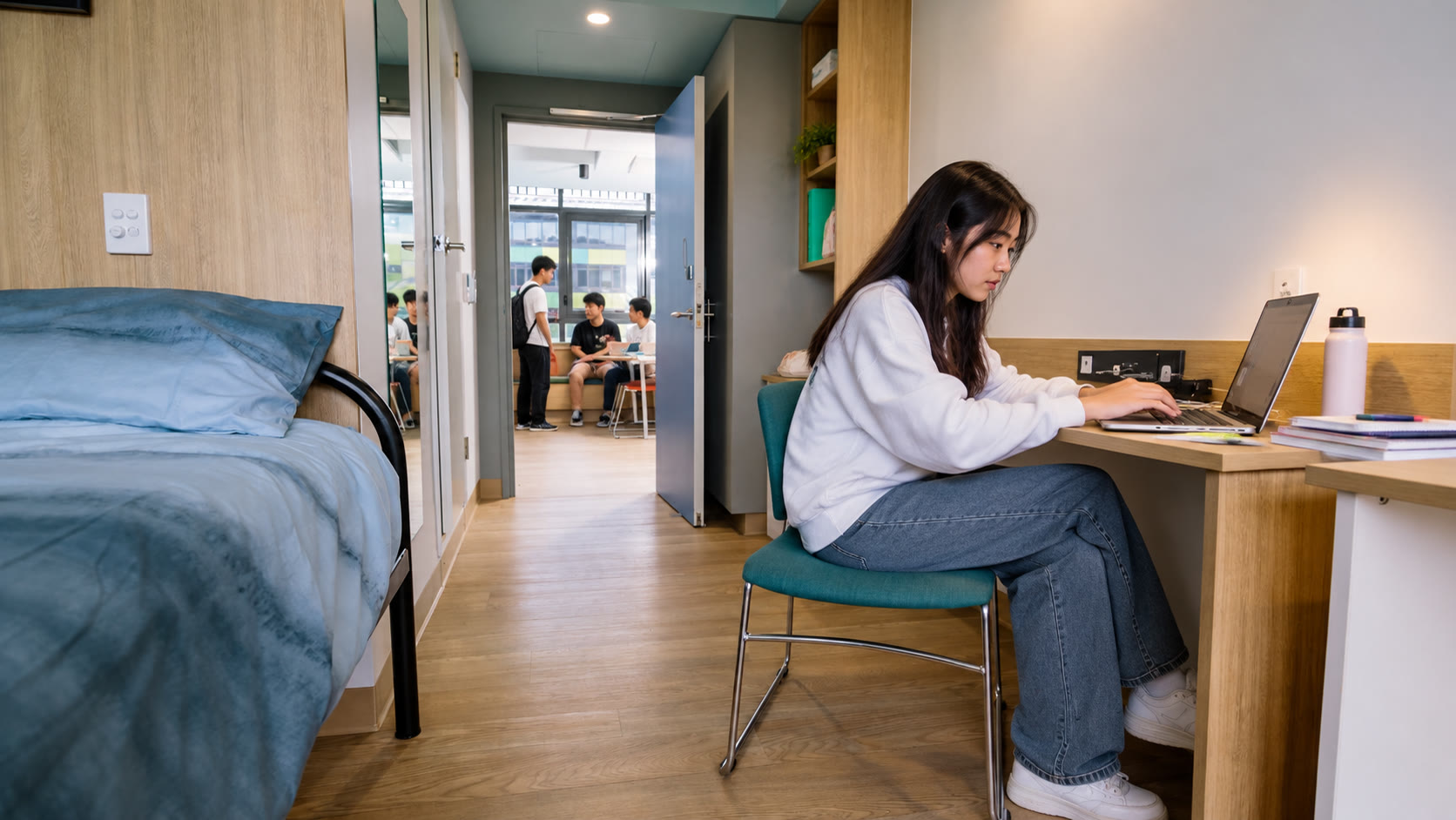
With accommodation on campus, the university becomes their home for the week: a place to learn, meet people, work together and celebrate what they create.
2027 program partners
Teams choose a problem within broad challenge themes, then develop their own approach with mentor guidance.
Their work could involve a digital concept, an AI demonstration, a sensor-based system or a simple physical prototype. Examples include:
Explore
Try creating
A demonstration that identifies different objects or species and tests how reliably it can distinguish them.
Explore
Try creating
A tool that interprets sample sensor readings, identifies changes and presents useful information.
Explore
Try creating
A simple model showing how a sensor or AI input could trigger an alert, movement or automated response.
These are illustrative possibilities. Teams develop their own ideas, with facilitators helping them choose an achievable scope.
Every team uses AI during its investigation and idea development. Teams are encouraged and supported to build and test a prototype, with additional recognition for practical development and evidence of testing.
Students follow five stages throughout the week:
Discover
Choose a problem and identify who or what it affects.
Investigate
Gather observations, ask questions and examine evidence.
Develop
Explore possible solutions and create a concept or prototype.
Test
Seek feedback, check assumptions and refine the idea.
Pitch
Explain the problem, demonstrate the solution and share what the team learned.
Mentors help students apply each stage to their project, including checking AI-generated information and explaining the limitations of their solution.
Monday
Meet your team and choose your challenge
Tuesday
Experience Australia and investigate firsthand
Wednesday
Explore AI and develop your solution
Thursday
Build, test and practise
Friday
Pitch, receive feedback and celebrate
Throughout the week, students receive support through group sessions, team coaching and one-on-one mentoring opportunities.
Facilitators guide the challenge process and help teams organise their work.
Mentors help students explore tools, develop ideas, overcome difficulties and prepare their presentations.
Researchers and industry guests introduce different ways of investigating problems and provide feedback during scheduled sessions.
English-speaking and Chinese-speaking support helps students understand activities and contribute confidently. Guest participation varies between program weeks.
Where schedules align, Australian students may also participate. Schools and agents will receive details of the arrangements for their group.
Six nights in Cairns
Students arrive on Sunday and depart on Saturday, giving them the full Monday–Friday program.
On-campus accommodation keeps the group close to its learning activities and creates time for shared meals, conversations and friendships throughout the week.
Accompanying teachers are encouraged to attend. Accommodation details, teacher costs and supervision responsibilities will be agreed with each school or agent before booking.
Every student who meets the program’s completion requirements receives a certificate recognising the core areas they worked on, including AI, innovation, problem-solving, teamwork and presentation.
Students also leave with a record of their team’s project and their own contribution: the problem they explored, the idea they developed and what they learned through the process.
The final showcase gives students an opportunity to practise explaining that work to an audience and responding to questions.
After returning home, students can continue using online learning resources and may choose to refine and resubmit their project. Details of annual project recognition will be announced as the program develops.
The Cohort Innovation Challenge is being developed as the first program within E3 Pathways, Cohort Group’s initiative supporting exploration of education, employment and entrepreneurship.
Pathway
What students explore
University life, research and disciplines they could study after school.
Pathway
What students explore
Industry roles and skills such as collaboration, technology use and communication.
Pathway
What students explore
How to identify a problem, develop an idea, consider its users and pitch a solution.
A closing reflection helps students identify what interested them, where they contributed and what they would like to explore next.
Students access a learning portal before travelling, with short modules covering:
The preparation helps students arrive with shared foundations and confidence to begin.
AUD $2,500 per student
Available through participating schools and education agents.
The Cairns participation package includes:
Arranged separately: flights, visas, travel insurance, personal expenses, additional travel and accompanying-teacher costs.
Group dates, accommodation arrangements and final activity details are confirmed before booking.
EXPRESS INTERESTThe program is open to students aged 14–18, participating through schools or education agents. Australian and international groups are welcome.
Students should bring curiosity, a willingness to contribute and an interest in exploring technology and ideas.
Previous coding, AI or robotics experience is optional. Students should be able to follow everyday instructions and participate in basic conversations in English, with Chinese-speaking support available.
Schools and agents can enquire for a complete group or a smaller number of students. Smaller groups may be matched to a suitable program week.
Tell us about your school or agency, estimated student numbers and preferred dates.
We are coordinating program weeks within proposed windows across 2027. Your expression of interest helps us identify suitable dates and opportunities to bring groups together.
Cohort Group will follow up to discuss availability, group needs and the next steps.
No payment is required to submit an expression of interest. Places are confirmed through the subsequent booking process.